

How Do You Choose the Right Curtain Bracket for Different Window Types?
Choosing a curtain bracket seems simple until you actually start measuring the window and looking at the space around it. A bracket that works well above a standard window may not be suitable for a deep recess, a narrow wall section, or a window that opens inward.
The curtain itself also matters. A lightweight sheer curtain puts very different demands on a bracket than a thick blackout curtain. So instead of choosing a bracket based only on appearance, it is more useful to start with the window type, mounting position, available space, curtain weight, and curtain rod.
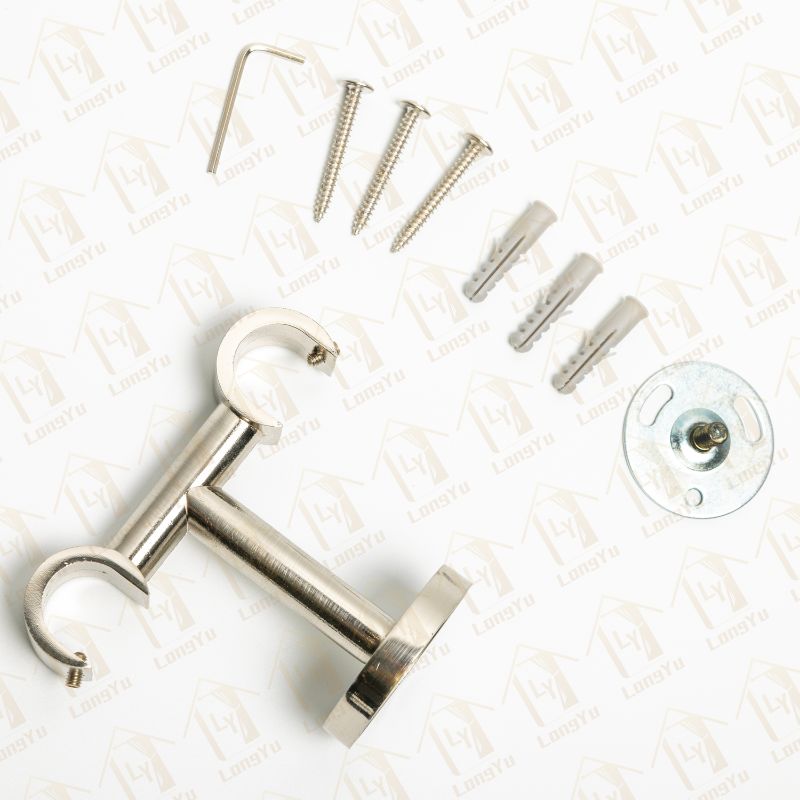
Start With the Window, Not the Bracket
Before buying a curtain bracket, take a look at how the window is positioned.
Is it set into a deep recess? Is there enough wall above it? Does the window open inward? Is there trim around the frame?
These details determine where the curtain rod can actually be installed.
| Window Situation | Common Mounting Approach | Main Point to Check |
|---|---|---|
| Standard flat wall window | Wall-mounted bracket | Available wall space |
| Recessed window | Inside or outside mount | Recess depth |
| Wide window | Multiple wall brackets | Center support |
| Window with deep trim | Extended projection bracket | Clearance from trim |
| Window close to ceiling | Ceiling or high wall mount | Installation position |
| Inward-opening window | Outside mount | Curtain clearance |
There is no single bracket that works equally well for every window.
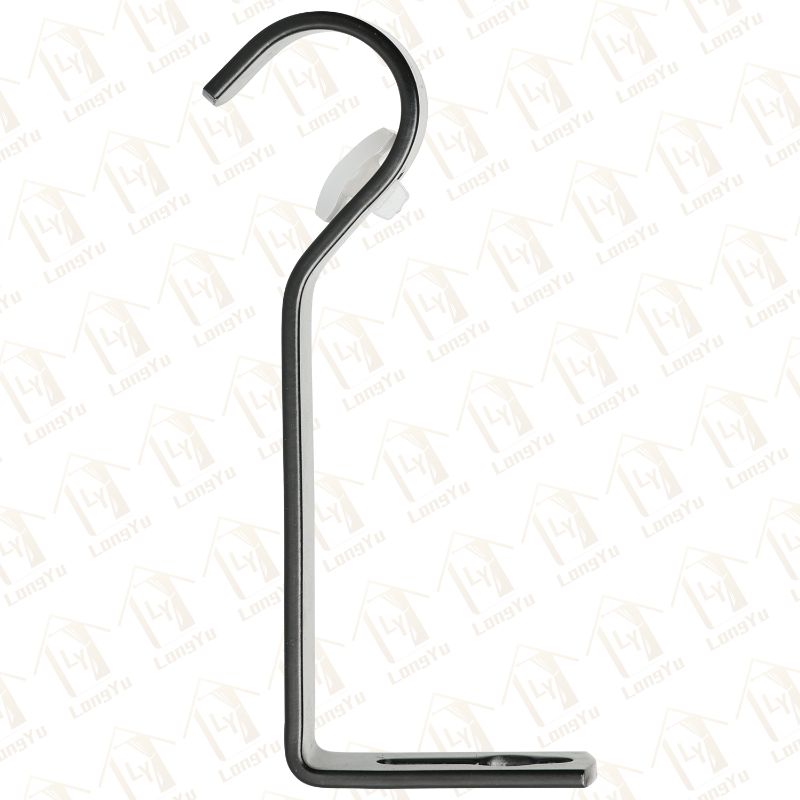
Standard Windows Are Usually the Simplest
For a conventional window installed on a flat wall, a standard wall-mounted curtain bracket is often enough.
The bracket is normally positioned above the window frame, with the curtain rod extending beyond both sides. This gives the curtains enough room to move away from the glass when opened.
One practical point is worth checking before drilling: make sure the bracket is not being installed directly into a weak section of drywall without suitable fixing hardware.
Even a strong metal bracket can become unstable if the mounting point cannot support the load.
What About Recessed Windows?
Recessed windows require a little more planning.
If the window sits inside a deep opening, you may have limited space for the bracket and curtain rod. An inside-mounted solution can keep the curtain within the recess, but the available depth needs to be measured first.
You also need to think about the curtain itself.
A thick curtain needs more clearance than a thin sheer. If the rod or bracket sits too close to the window, the curtain may rub against the frame or interfere with the window when it is opened.
Measure These Three Things
- Recess depth
- Distance between the window and surrounding frame
- Space needed for the curtain to move
A few minutes with a tape measure can prevent a bracket from being installed in a position that looks fine on paper but does not work once the curtain is fitted.
Wide Windows Need More Than Two Brackets
A wide window creates a different problem: the curtain rod itself may sag in the middle.
This is why a long curtain rod often needs a center support bracket.
For example, if the rod spans a wide living-room window and carries heavy curtains, placing brackets only at the two ends puts most of the load on the rod between those mounting points.
Adding a center bracket reduces the unsupported span.
A Simple Rule to Keep in Mind
The longer the rod and the heavier the curtains, the more attention should be paid to support spacing.
The exact number of brackets depends on the rod length, rod material, curtain weight, and mounting surface, so it is better to follow the bracket and rod manufacturer's load recommendations rather than rely on a fixed number for every installation.
Windows With Deep Trim Need More Clearance
Some windows have wide decorative trim or deep frames around them.
In this situation, a standard short-projection bracket may place the curtain rod too close to the wall or window frame.
The result is easy to notice after installation: the curtain hangs against the trim instead of falling naturally.
A bracket with greater projection can move the rod farther away from the wall.
This creates additional clearance for the curtain and can also make it easier to operate the window.
Think About the Curtain's Full Thickness
This is particularly important with:
- Blackout curtains
- Thermal curtains
- Heavy lined curtains
- Layered curtains
- Curtains with large pleats
The thicker the curtain stack, the more space it may need between the rod and the wall.
When Is Ceiling Mounting Useful?
Sometimes there simply is not enough wall space above the window.
For example, the window may extend almost to the ceiling, leaving little room for a conventional wall-mounted bracket.
A ceiling-mounted curtain rod can solve this problem by moving the mounting point from the wall to the ceiling.
This approach is also useful when you want the curtains to extend from near the ceiling down to the floor. In some rooms, this creates a cleaner appearance while avoiding a crowded area above the window.
However, the ceiling material needs to be considered before installation. A bracket fixed into a suitable structural surface is very different from one attached only to a weak ceiling finish.
What If the Window Opens Inward?
This is an easy detail to overlook.
If a window opens inward and the curtain sits too close to it, the curtain or rod may interfere with the window.
In such cases, mounting the curtain farther outside the window opening can provide the clearance needed to open the window normally.
The same principle applies to handles, locks, blinds, and other hardware around the window.
Before selecting the bracket, open the window fully and check where the moving parts travel.
The Curtain Weight Matters Too
The window determines where the bracket needs to go. The curtain helps determine how strong the bracket needs to be.
A lightweight voile curtain does not put the same load on a bracket as a heavy blackout curtain.
| Curtain Type | Typical Consideration |
|---|---|
| Sheer curtain | Lower load, basic support may be sufficient |
| Lightweight fabric curtain | Moderate load |
| Blackout curtain | Higher load and greater projection may be needed |
| Heavy lined curtain | Stronger support and suitable fixing required |
| Double-layer curtains | Consider both total weight and rod arrangement |
The total load includes more than the fabric. The curtain rod, rings, hooks, and other hardware also contribute to the weight.
Don't Forget the Mounting Surface
A bracket may be perfectly suitable for the window and curtain but still fail because of the mounting surface.
Common surfaces include drywall, wood, brick, and concrete. Each requires an appropriate fixing method.
For example, simply using the same screw and wall plug for every wall type is not a good installation practice.
The fixing hardware should match the surface and the expected load.
A Strong Bracket Still Needs a Good Fixing Point
This is one of the most practical things to remember when installing curtain hardware.
The bracket carries the curtain rod, but the wall or ceiling carries the bracket.
If the fixing point is weak, increasing the strength of the bracket itself will not solve the problem.
How Should You Choose the Bracket Projection?
Projection refers to how far the curtain rod sits away from the mounting surface.
This measurement becomes important when there are obstacles between the curtain and the wall.
You may need additional projection when the window has:
- Deep trim
- Window handles
- Existing blinds
- Radiators
- Wide window frames
- Thick curtains
A bracket with insufficient projection can cause the curtain to rub against these objects.
On the other hand, excessive projection can make the installation unnecessarily bulky.
The goal is to provide enough clearance without moving the curtain rod farther away from the wall than necessary.
A Practical Selection Checklist
Before ordering curtain brackets, it helps to check the installation from several angles.
Measure the Window
Record the window width, frame depth, and available wall space.
Check the Curtain
Consider the curtain material, total weight, thickness, and whether you are installing one or two layers.
Check the Rod
Make sure the selected bracket is compatible with the rod diameter and mounting arrangement.
Check the Wall or Ceiling
Identify the mounting surface and select suitable fixing hardware.
Check Clearance
Look for handles, window frames, blinds, radiators, and other objects that could interfere with the curtain.
Final Thoughts
Choosing a curtain bracket does not have to be complicated. The important thing is to look at the complete installation rather than the bracket by itself.
Measure the window, check the curtain weight, look at the mounting surface, and make sure there is enough clearance for the curtain and window to move normally.
Once these factors are clear, choosing the right curtain bracket becomes much more straightforward.